
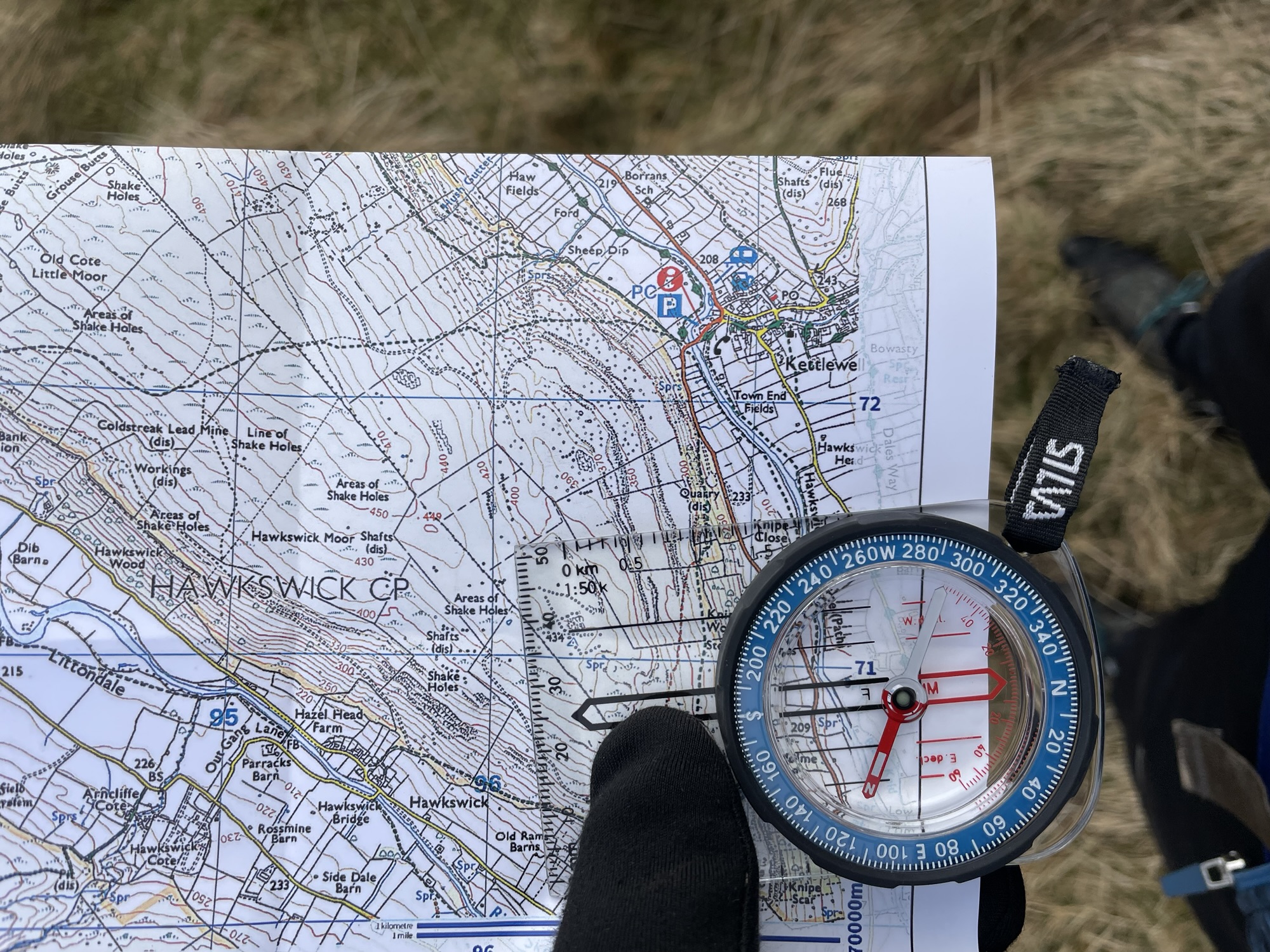
A lack of confidence in navigating with a map and compass, for me at least, has lead to an over-reliance on electronic navigation devices. This is not great for many reasons, but it certainly isn’t great for someone who wants to immerse themselves in the fell running scene. Despite many ignoring the rules, the Fell Running Association (FRA) stipulates that electronic GPS devices are prohibited from use during any races associated with the FRA.
I therefore need to develop my map and compass skills and improve my confidence in using them. Where better to start than the FRA’s very own navigation course.
The FRA run two courses per year. One in the spring, in Kettlewell in the Yorkshire Dales, and the other in the autumn in Elterwater in the Lakes. I opted for the former, and cannot comment on whether the Elterwater offering follows the same format.
The cost of the course includes two nights shared accommodation in a youth hostel, along with 2x breakfasts, 2x ‘on the hill’ packed lunches and one evening meal. The breakfast consisted of either porridge, with various toppings, or a full English. The hill snacks included a batch, a piece of fruit, packet of crisps, a homemade flapjack and some kind of snack bar. The evening meal was a very hearty bowl of shepherd’s pie. This alone is well worth the £100 cost of the course, before even considering the course content.
The first evening was spent running through some basic map reading theory in the dining room, in small groups based on previous map reading knowledge and general speed when moving in the hills. These groups remained the same for the rest of the weekend.
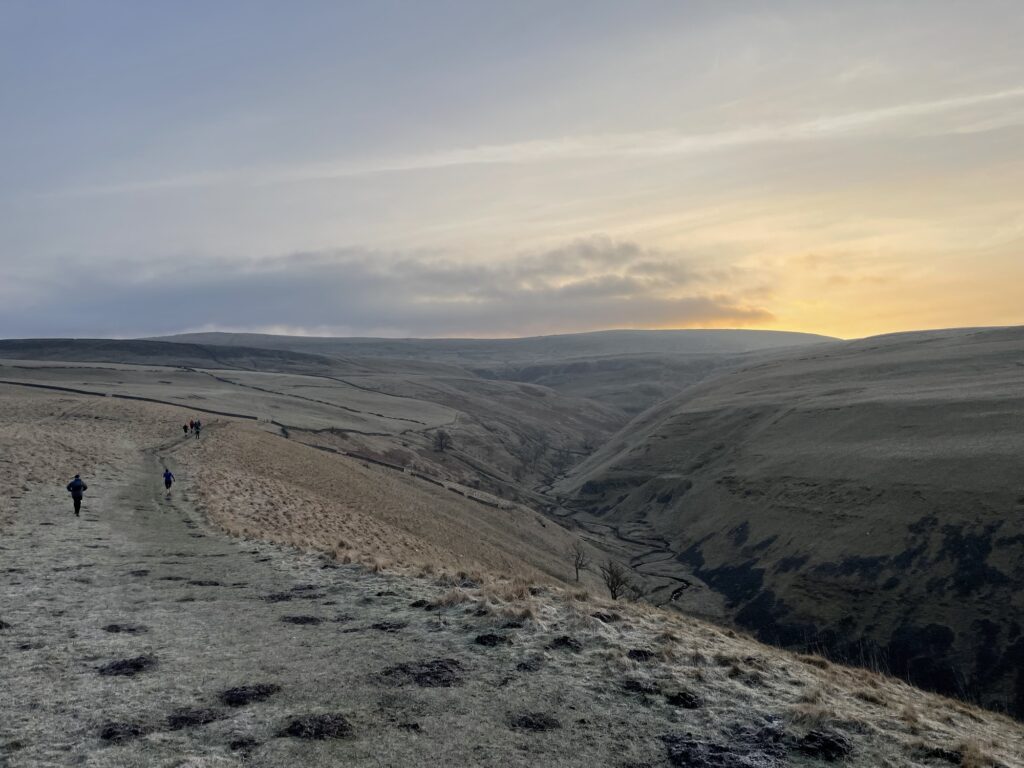
A full group run was scheduled for the Saturday morning for whoever fancied it. A very relaxed out-and-back, before breakfast, from the Kettlewell hostel up to Hag Dyke, another local hostel which is up at 460 m, just beneath Great Whernside. And what a morning we were treated to.
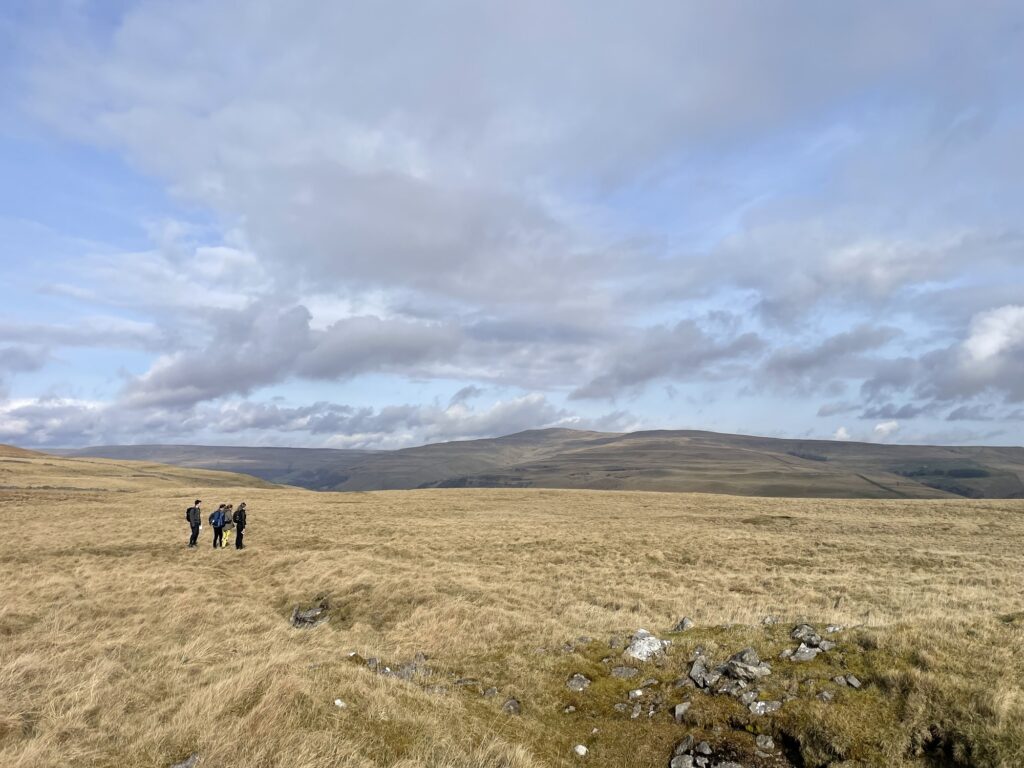
After breakfast, we had a little more theory before grabbing our hill snacks and heading out in our smaller groups for some practical exercises. Armed with an OS Map and a compass, we were given features to find out on the terrain. Sink holes, sheep folds, bodies of water. We were on open access land, so some of this involved well-defined trails, some of it involved going off-piste. We were out for around four and a half hours, and covered just over 7 miles. Other groups covered more distance, but we were a slow moving group, given our previous experience.
Solo short course
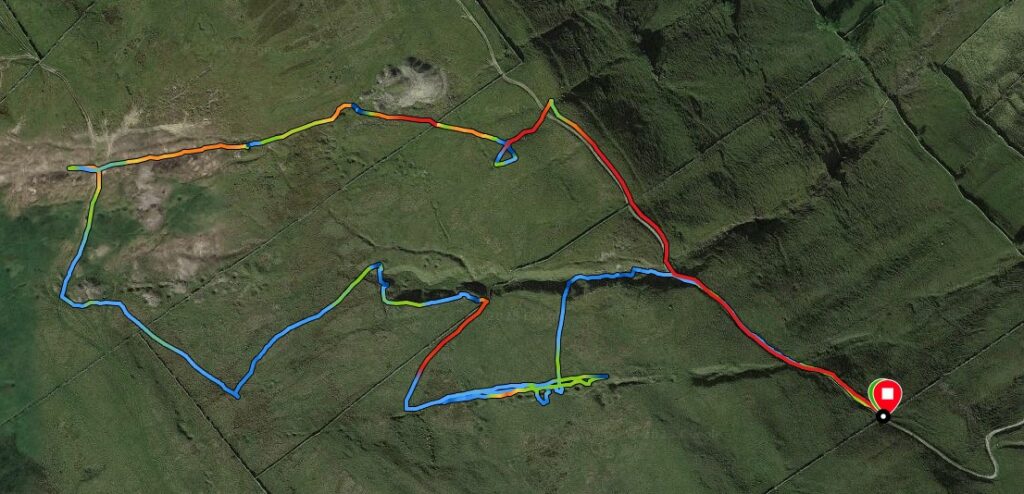
At the end of the roaming, all groups congregated together and we were given a short orienteering course to negotiate solo. We were set off in intervals and given a different order of checkpoints, so there was no following of each other. With a small amount of searching around for one of the checkpoints, I completed the course in 23:36 and covered 1.4 miles. This should definitely have been shorter, and quicker.
Then it was back to the hostel for a shower and an amazing dinner before heading out for a night navigation exercise, in a similar format to the daytime one, this time in pairs.
Night navigation in pairs
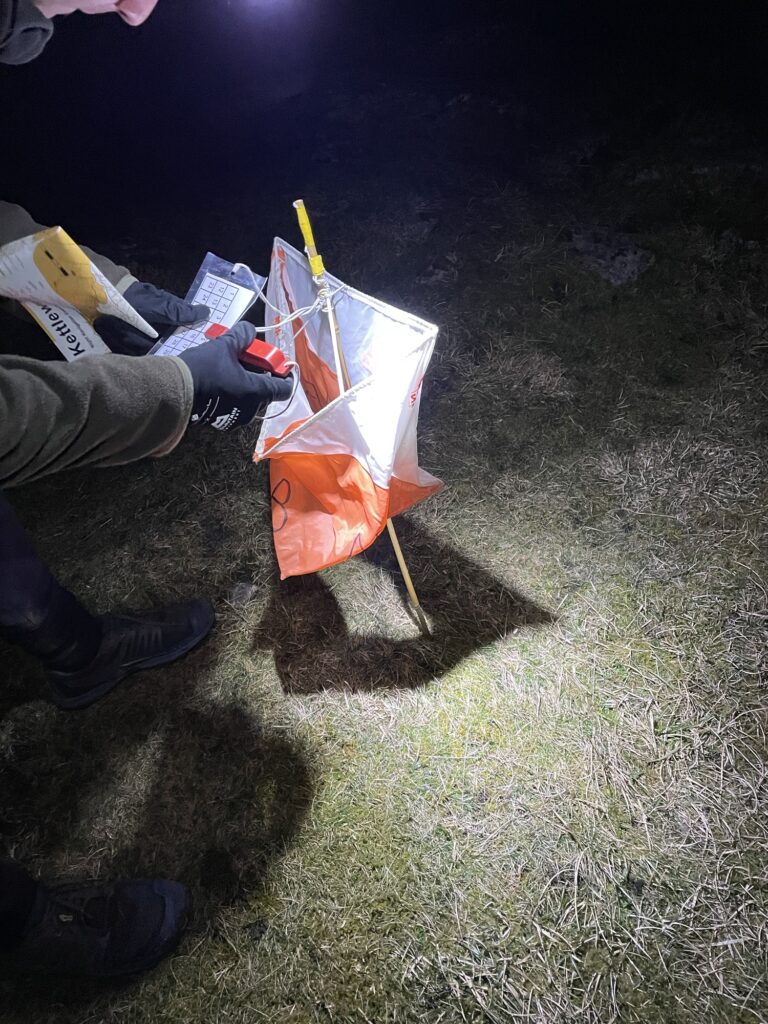
This one took us just over an hour to complete, covering 2.25 miles. It was at this point that I realised that my head torch, which is perfectly capable of lighting the way around my local country lanes, just doesn’t cut it while in the hills and mountains. Better to find that out now than when in the middle of an ultra, or a Bob Graham recce.
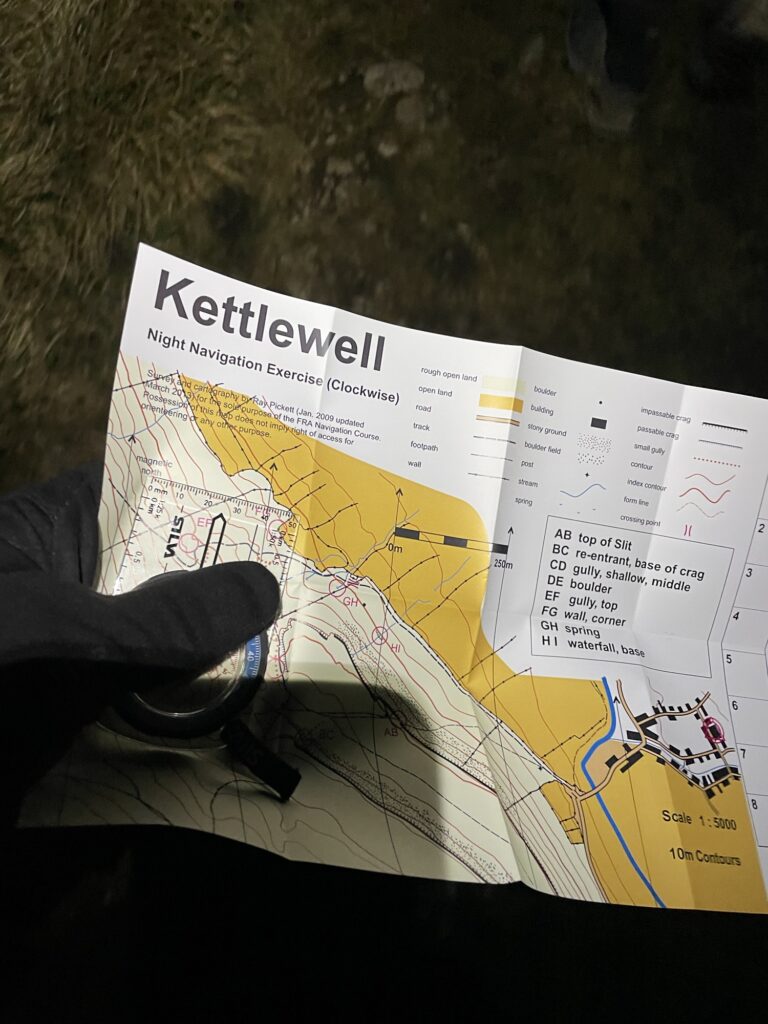
Anyway, we went wrong on the second checkpoint, simply because we didn’t read the key correctly, but we didn’t do too badly other than that. We basically missed the post feature and continued on beyond the map. We had realised our error when we started to climb and weren’t expecting to, but one of the course guides was watching us and directed us back on path. The GPS result below shows how far beyond that post we walked before heading back and turning where we should have in the first place.
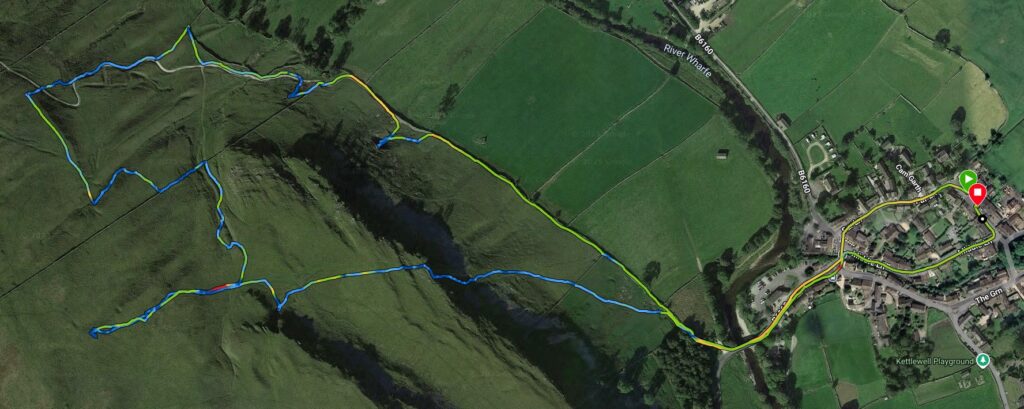
The final action for the weekend, following Sunday breakfast, was a solo long course. We marked out the route on our own individual maps, recorded the checkpoint codes and notes and off we set, again in intervals to reduce the amount of following. Given the 3+ hour drive home still to follow, I requested to be one of the first to set off.
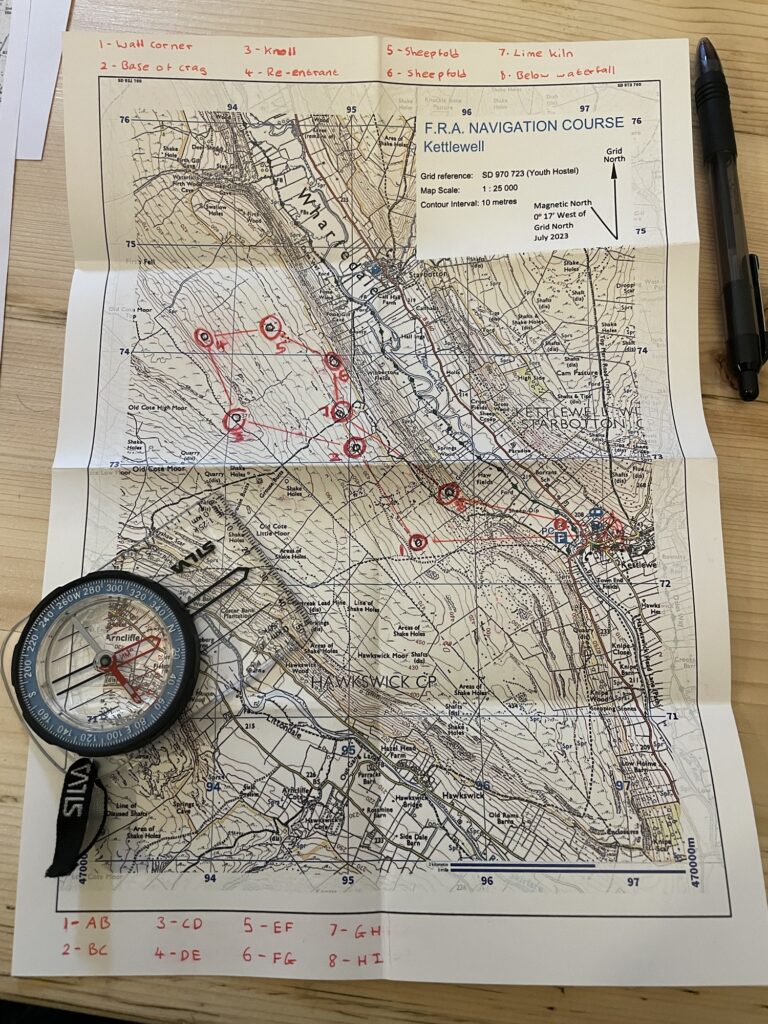
There are, of course, several different routes to take in between each checkpoint when orienteering. How well you can plot a route between checkpoints determines how fast you will be over a given course just as much as how talented a runner you are. I plotted out my plan in the hostel dining room and set off with confidence…
Solo long course
The first checkpoint (CP) is at the corner of a wall, notably the outside corner. My plan here was to follow the main, lower path until I hit the wall and then climb up the steep bank on the outside of the wall until I reached the corner and the CP. Sure, I could have taken the wiggly path which climbed from the main path (as many did) and then deviate off when I could see the CP. However, I wouldn’t be able to do this in clag, and how would I know when I would need to come off the path and ‘attack’? Instead, I could use the wall as a handrail, knowing, with confidence, that it would lead me directly to the checkpoint.
As it turned out, I followed the wrong wall! I took the first one when I should have taken the second. As a result, I climbed a lot higher than I needed to to try and find a stile to get me onto the correct side of the wall, where I could then head to the wall that I should have followed. Luckily, there was no clag today, so I could see the CP once I had climbed the stile and headed straight for it.
CP2 was easy enough and CP3 was another ‘follow the wall’ job. Upon checking the map however, I couldn’t see an obvious break in the wall which stood between the two checkpoints. Many of the others checked off CP2 and then took a direct route up to CP3. I headed slightly downhill to the obvious large gap in the wall (where there was a path) and then followed the trajectory of the wall up to the wall at the top, and then used the top wall as a handrail to grab CP3. This was definitely not the easy way, and the climb was tough on uneven ground and through thigh-high vegetation. I found it without error though and progressed on.
The next one was the hardest one to find. Well, the hardest one to head towards at least. I dropped down in elevation slightly and then my plan was to traverse along at the same elevation until I came to CP4. It turns out I didn’t drop down nearly as much as I had thought. The CP was quite clear in the re-entrant once I became in line with it, but it seemed so far down that I thought it was actually CP5. After spending a few minutes hunting around (I wasn’t the only one), one of the guides came out of hiding and gave us all a helping hand.
CP’s 5, 6 and 7 were all straightforward. In or around some form of wall, and the route to CP8 looked easy enough too. However, I couldn’t find the lower path. There was a building and a couple of holding pens (for sheep I presume) and I kept reaching dead ends, not able to find a route through. Eventually, I found a small gap in a wall, just beyond a large gate, which was signposted as a footpath. I called back another guy on the course who had walked straight past it. Easily done.
Once on the path, it was a question of following it until I reached the waterfall. There were a couple of false falls which had me mislead, but I eventually came across the correct one. Given that we had marked the courses ourselves, at this point I was questioning how accurately I had marked CP8. Was it above the path, towards the source of the waterfall, or was it below the path, further down the stream? There were four of us searching around and the first to find it called out and the rest of us followed. I don’t imagine the competitors at real orienteering events are as forthcoming with sharing the location of checkpoints.
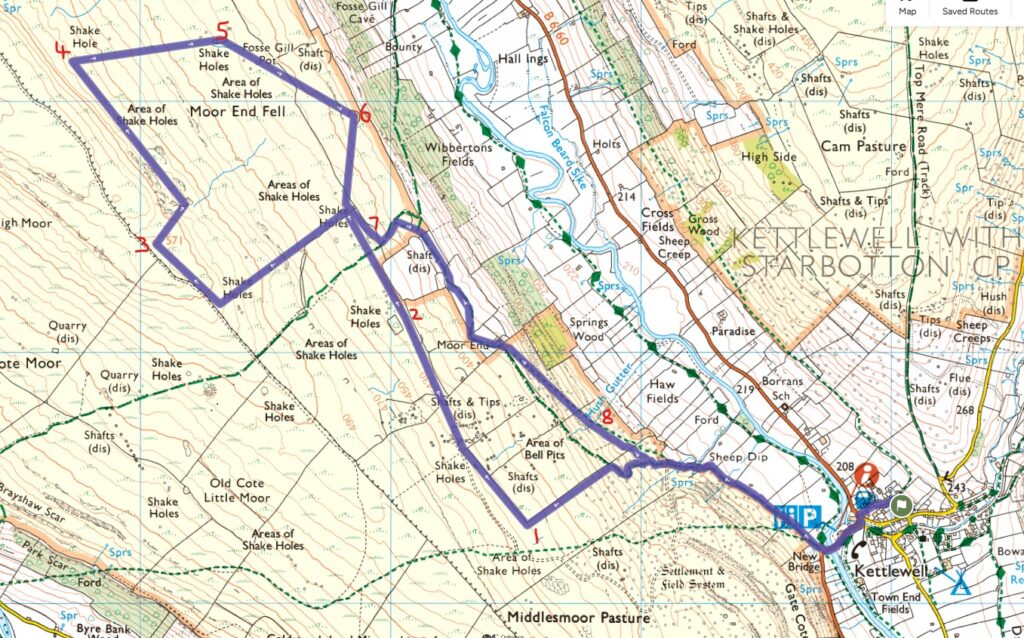
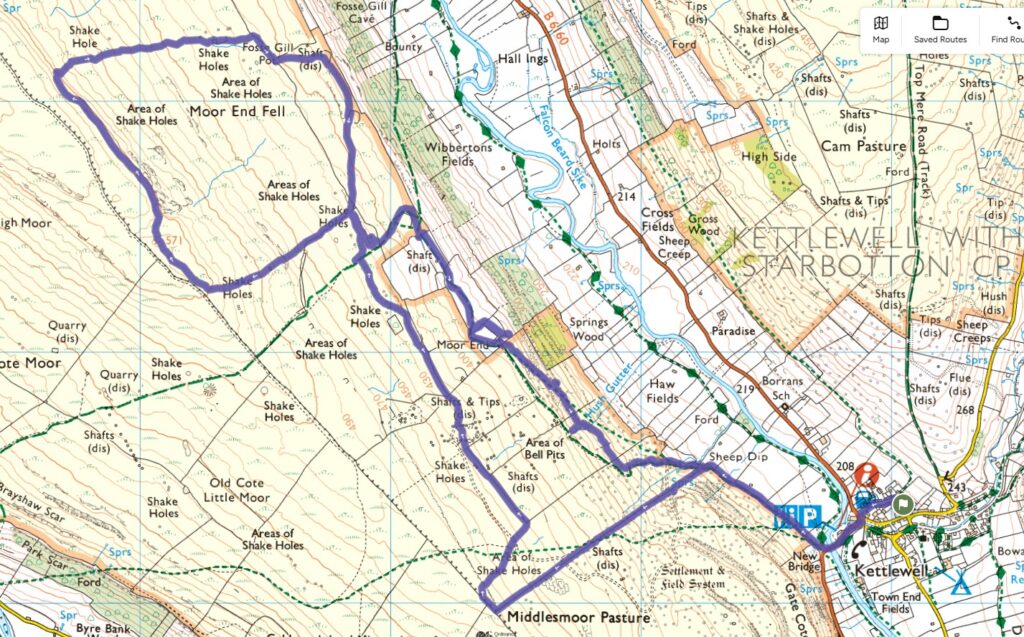
The two images below show my planned route (using OS Maps online after the event) versus my actual GPS trace. Definitely some practice needed, but I don’t think I was too far out after just a couple of days of map reading.
I have to say, the weekend was fantastic and excellent value for money. I would definitely recommend it to anyone wanting to gain more knowledge of navigating with a map and compass. For anyone interested in the course that I did, you can find out more here.
Leave a Reply